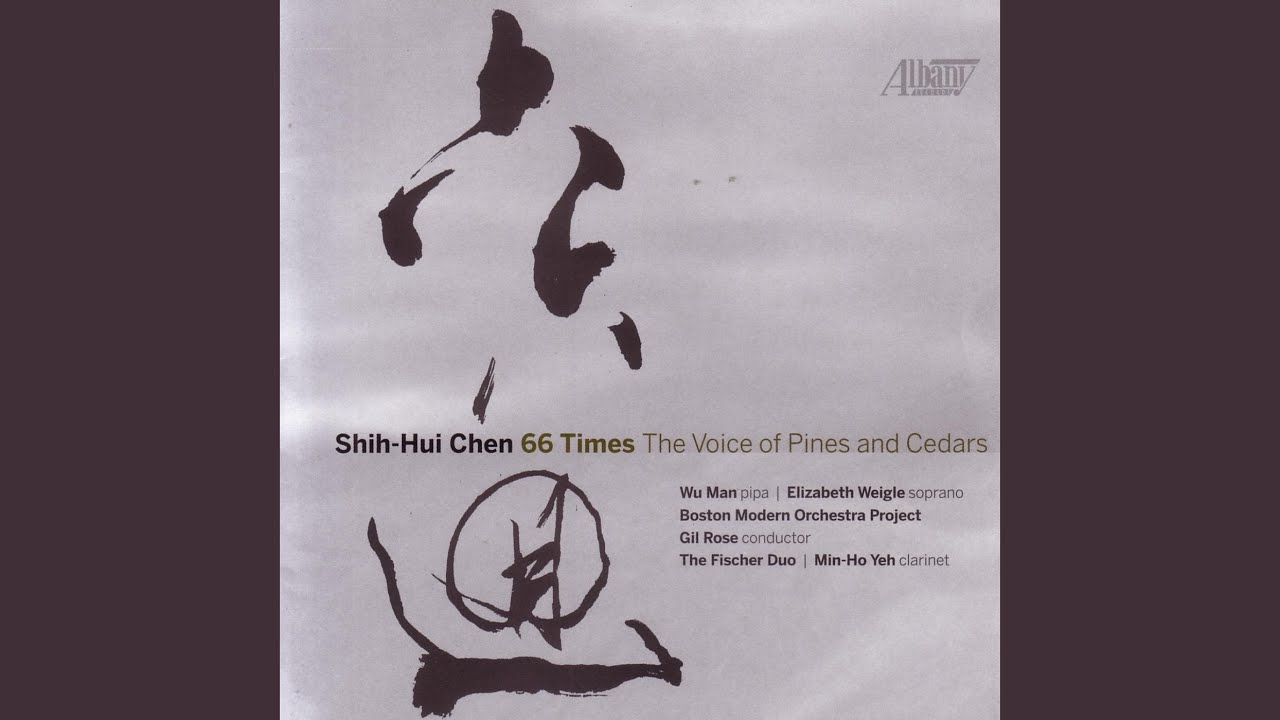
The title, 66 Times, the Voice of Pines and Cedars, refers to the text of the last song in this piece, an English translation of a poem written by a Zen nun in the 18th century. The remaining texts are taken from the Kokinshu, a collection of Japanese poetry from the early 10th century. All of these poems share similar characteristics in the way they depict nature. Each movement represents a different season, beginning and ending with autumn.
There are two versions of this work. In addition to this setting for soprano and chamber ensemble, there is a setting for soprano and chamber orchestra. The orchestral version was premiered by the Cleveland Chamber Symphony Orchestra and the ensemble version was premiered in Boston at an Underground Composers Collective concert.
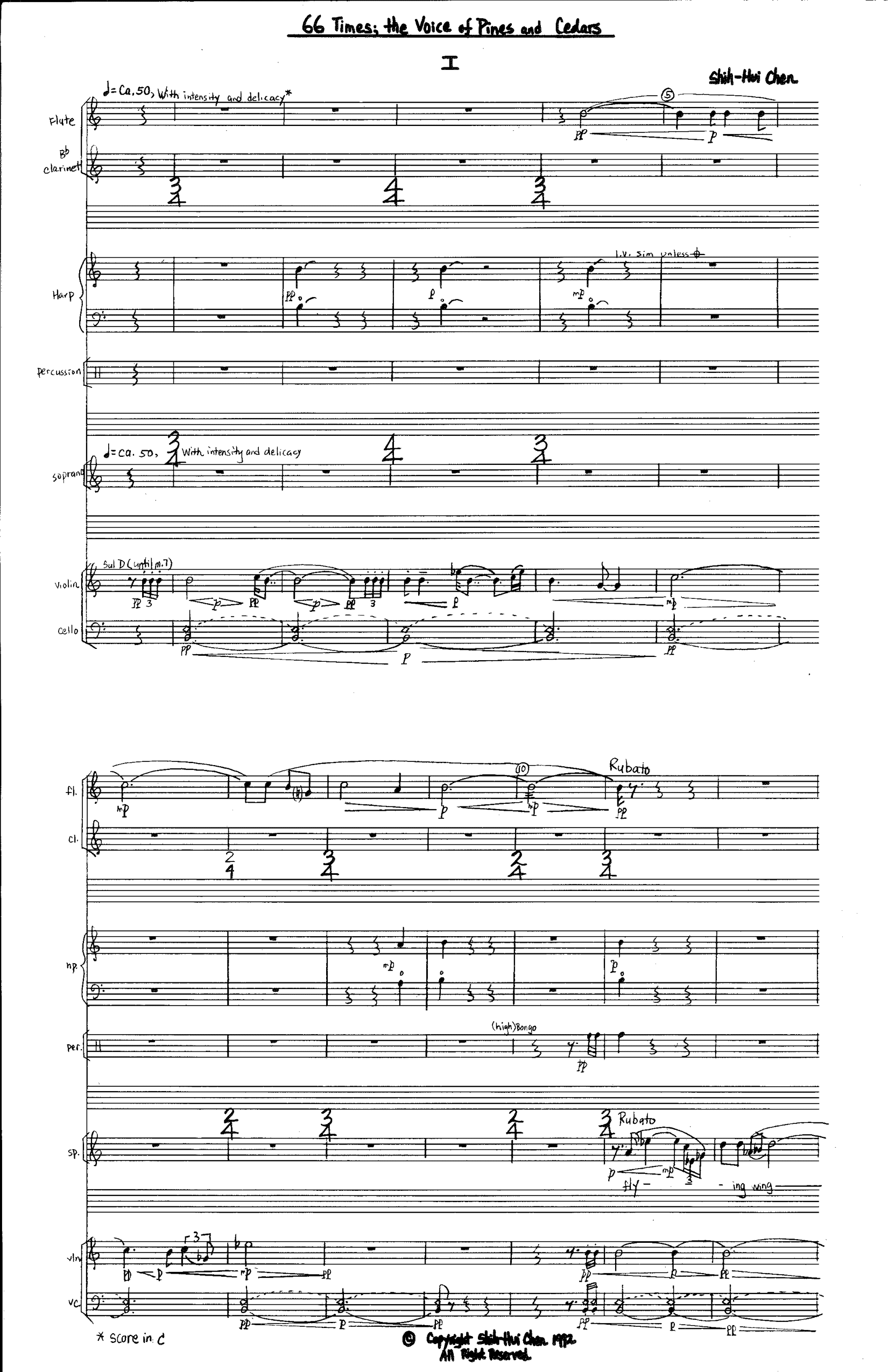
flying wing in wing
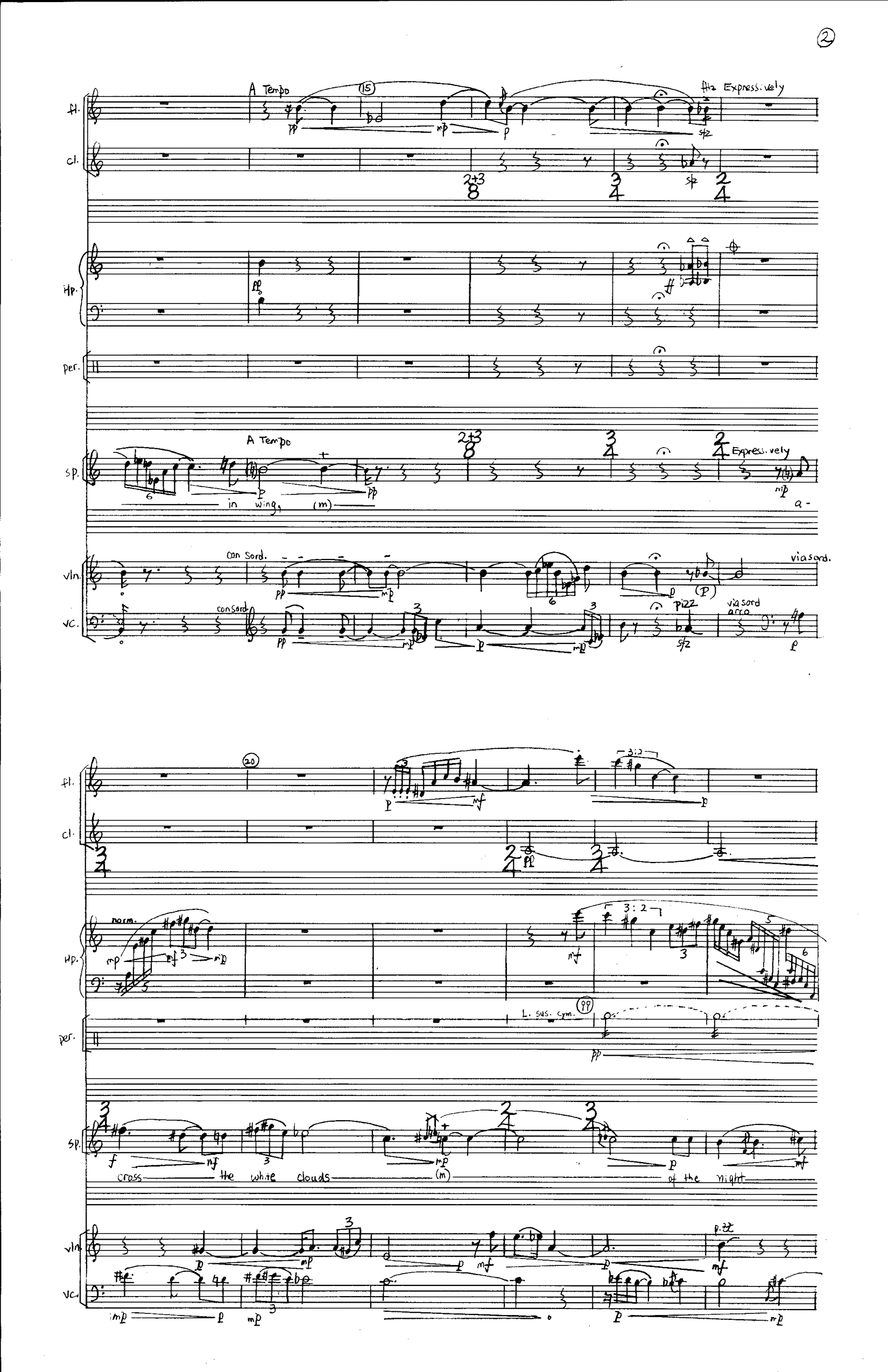
across the white clouds of the
night sky the wild geese
go their very number
vivid beneath the autumn moon
oh sweet nightingale
your first songs of the season
unleashed unbidden
a love without an object a
love without the hope of joy
oh sweet nightingale
of the mountains you who wait
for midsummer's month
flutter your wings raise your voice
sing us your unforgotten song
oh sweet nightingale
do not return to your home
in faraway hills
as long as you can sing please
remain here in my garden
when the warm mists veil
all and buds swell while yet the
spring snows drift downward
even in the hibernal
village crystal blossoms fall
sixty-six times have these eyes beheld the
changing scenes of autumn
I have said enough about moonlight; ask me
no more
Only listen to the voice of pines and cedars
when no wind stirs
Poems I-III have been used with permission given by Laurel Rasplica Rodd with Mary Catherine Henkenius. Kokinshu: A Collection of Poems Ancient and Modern. Boston, MA, Cheng Tsui, 1996. (Reprint of clothbound edition published by Princeton University Press, 1984.)
Poem IV has been used with permission given by Charles E. Tuttle Co., Inc