This work can be performed as a concert version. It can also use a small string orchestra (4-4-3-3-2).
Our Son Is Not Coming Home To Dinner
ca. 27’
Videos
Score
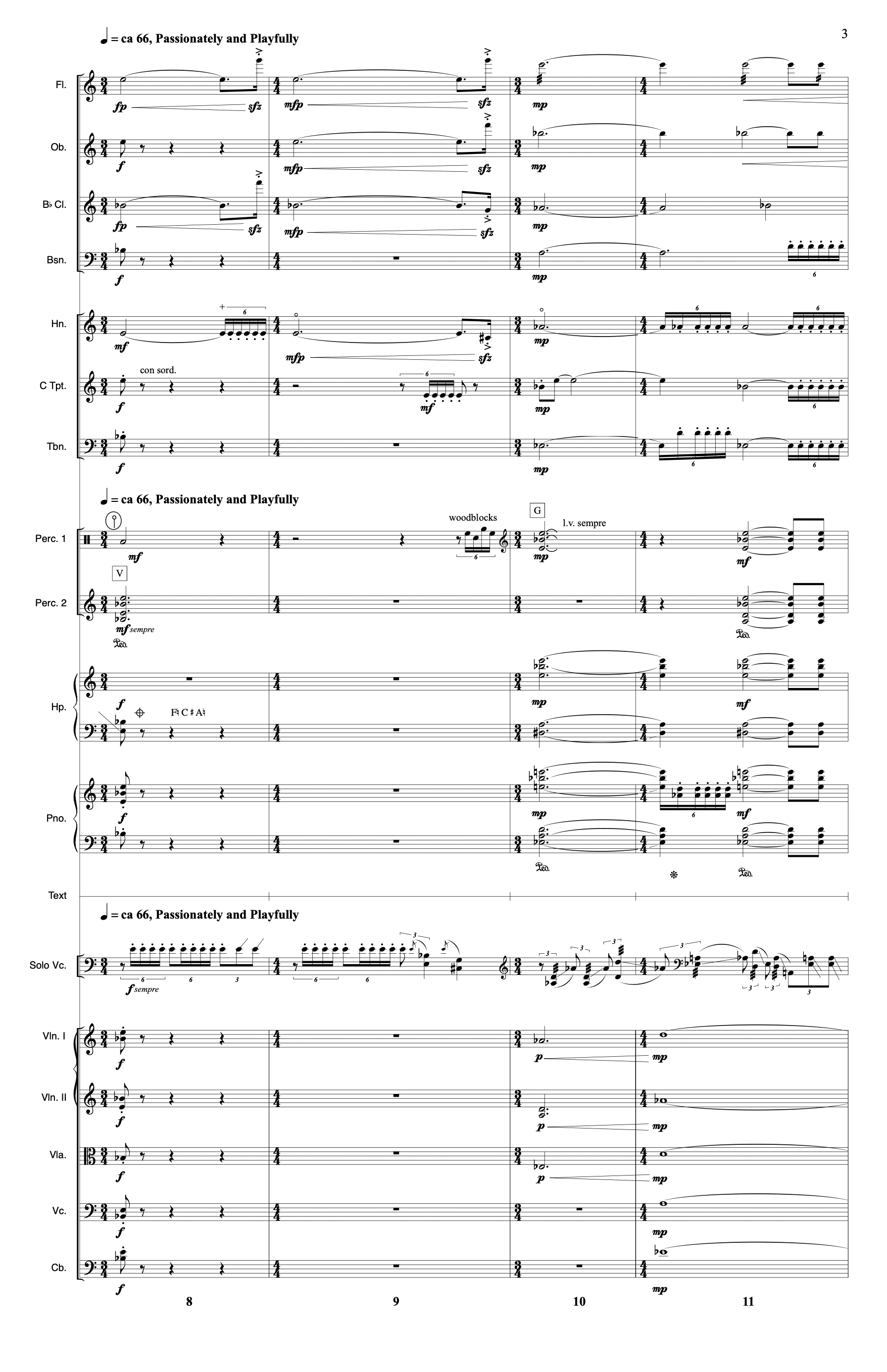
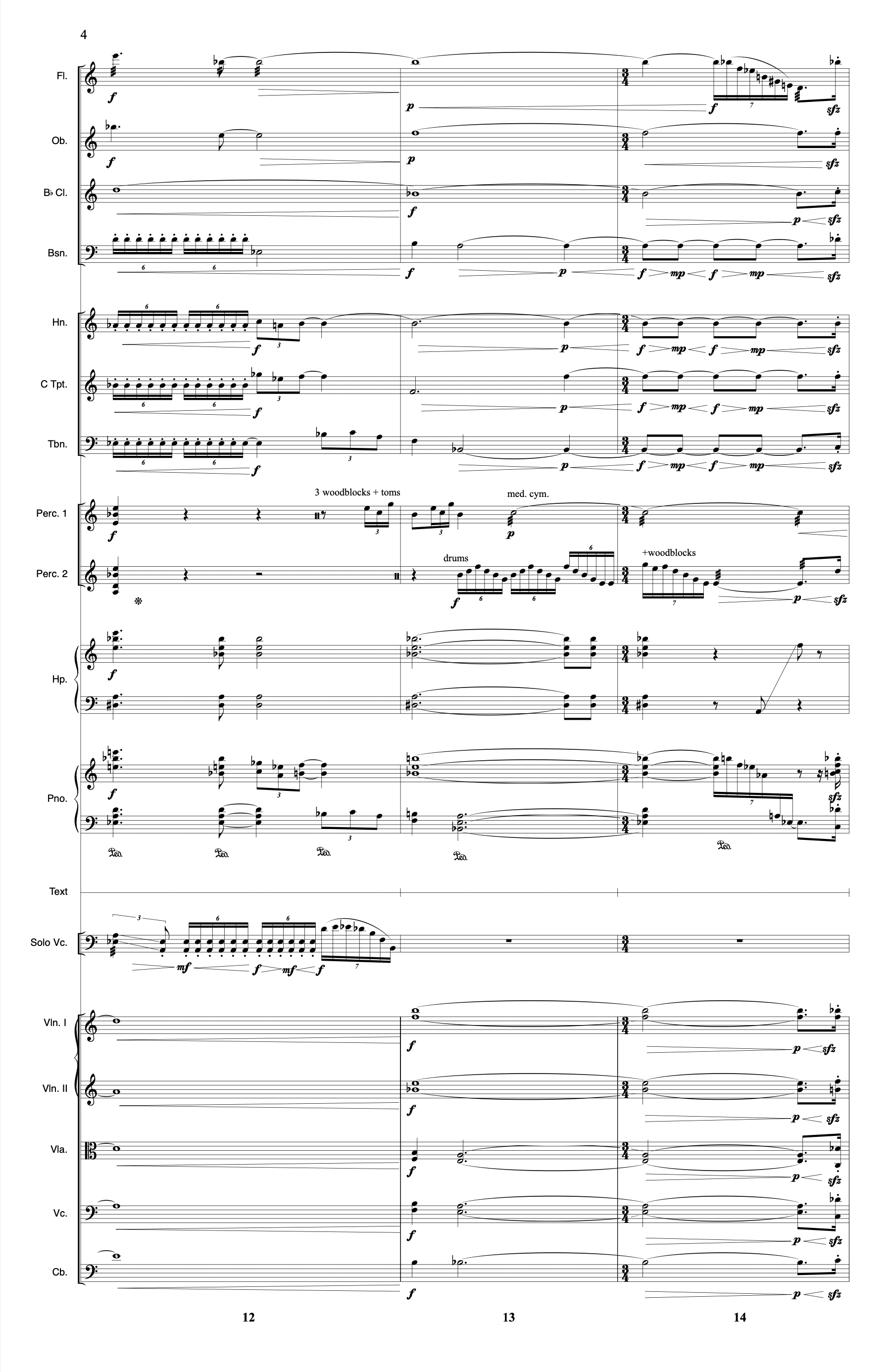
Our Son Is Not Coming Home To Dinner
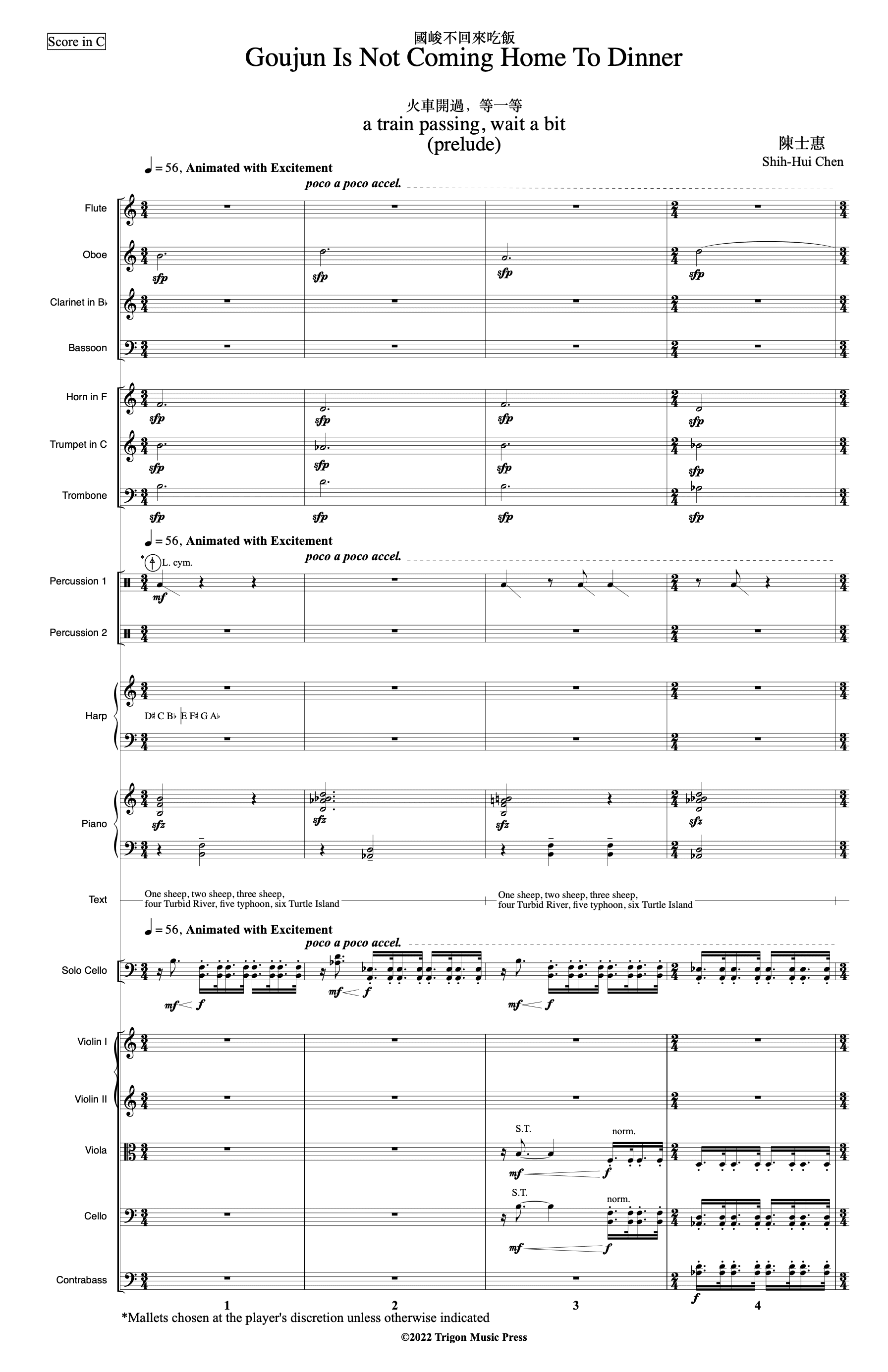
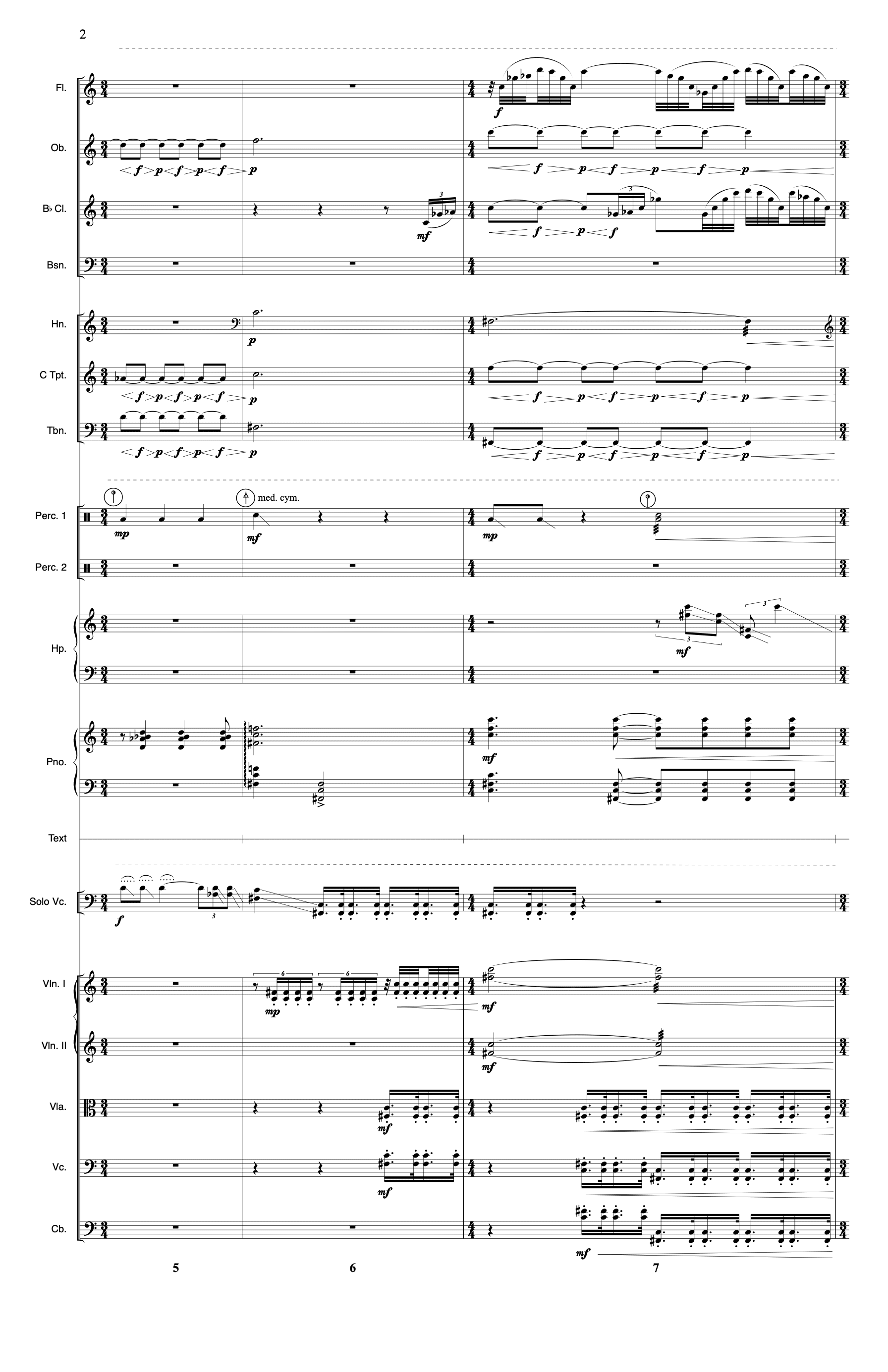
a train passing, wait a bit (prelude)
Silvergrass
kok kok kyang, sandalwood chanting (interlude 1)
My Vegetarian Sutra-chanting Grandmother
he dreamt of you (interlude 2)
Turtle Island
we do not wait for you (interlude 3)
Guojun Is Not Coming Home to Dinner
but save a seat, save a seat (postlude)
Program Notes
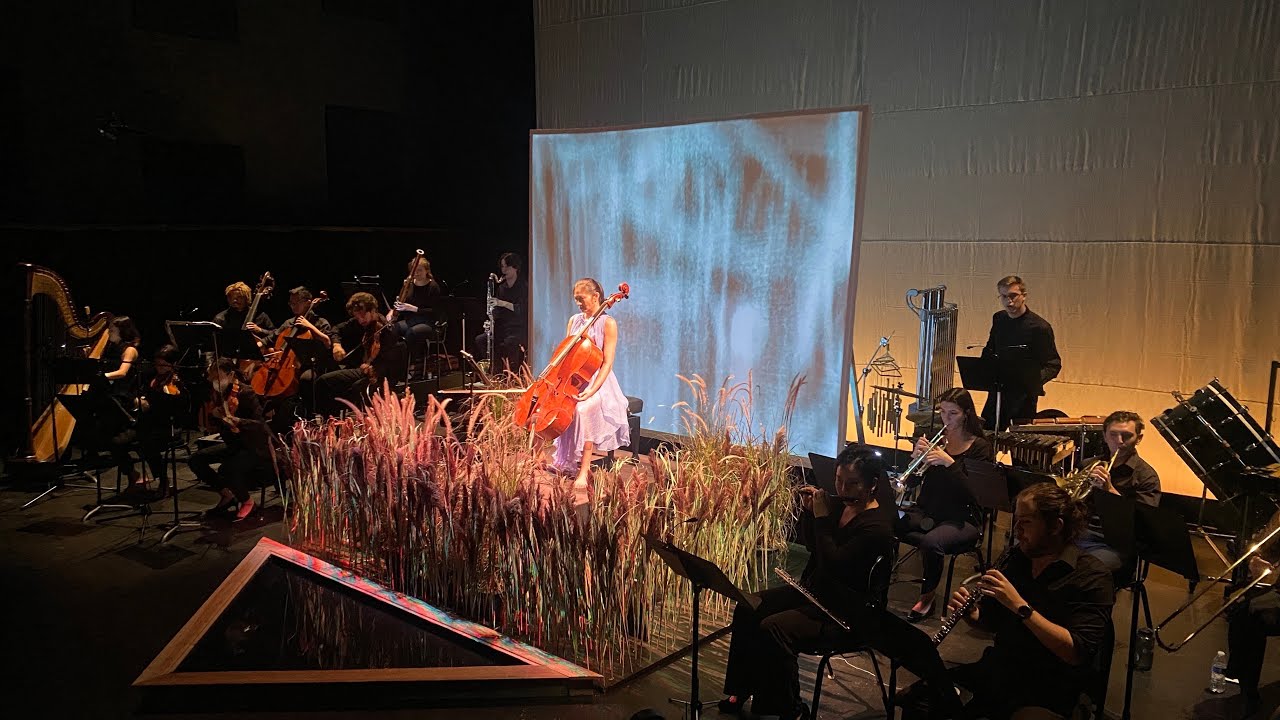
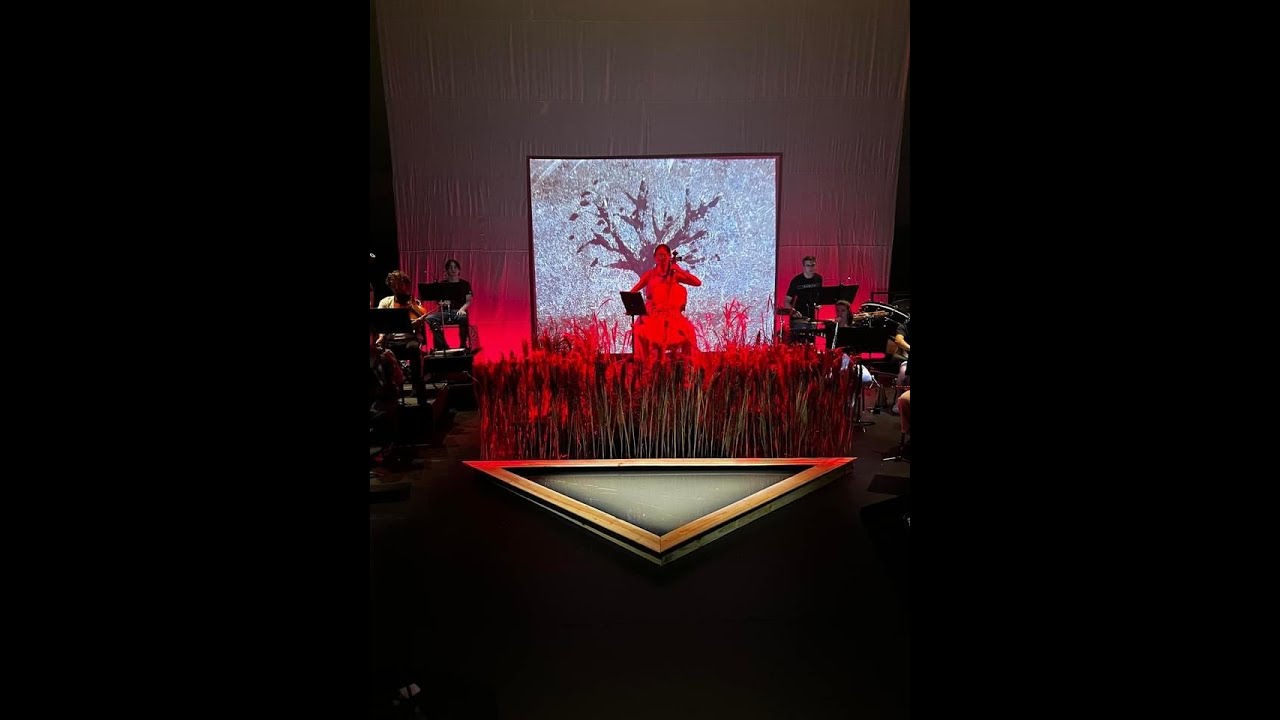
Our Son Is Not Coming Home To Dinner is a twenty-seven minute, multimedia, cello concerto written by composer Shih-Hui Chen and staged by director Doug Fitch with a video assemblage by Tommy Nguyen. Just upstage of a small triangular reflecting pool, on a central dais surrounded by Silvergrass the solo cellist is seated. Behind her is a translucent projection screen on which shifting imagery plays like a still-life in motion. An ensemble of sixteen players* fills out the stage, all illuminated by an intricate lighting by Nicholas Houfek, designed to set the drama visually and move the storyline forward.
The central structure of this work is four movements of abstract music, inspired by four poems by the Taiwanese writer Chunming Huang: Silvergrass, My Vegetarian Sutra- chanting Grandmother, Turtle Island, and Guojun Is Not Coming Home to Dinner. The four poems are typical of Huang’s passion for depicting working-class lives and mundane daily activities in Taiwan, and they share depictions of devotional duties: The silvergrass' dutiful annual sweeping of the sky; the grandmother’s daily chanting and vegetarian observances; a traveler whose emotion is tied to home, who changes the sheep-counting chant to words about home; and the parents who keep a seat for their child, who will never return. While the first three poems are cheerful, even child-like, the last poem introduces a profound sadness, conveying the grief of Huang and his wife over their son’s tragic death at age thirty.
Our Son Not Coming Home to Dinner is infused with universal themes of nostalgia and loss. This multimedia, cross-cultural, storytelling work is an attempt to reach out to a diverse audience, inviting them to hear and see the imagery of changing moods and shifting times. This works is commissioned by and dedicated to Sophie Shao.
Silvergrass
On this day of every year
The silvergrass never forgets to come
To sweep the sky
During daytime
The silvergrass stands by the streams
Sweeping the sky blue
It stands on tiptoes on mountaintops
Sweeping the sky high
Then it calls the sky that is swept blue and high
Autumn
At night
The silvergrass
Stands by the streams
Dusting the stars bright
It stands on tiptoes on mountaintops
Dusting the stars far
Then it calls the stars that are dusted bright and far
The Milky Way
An old farmer
Uses the sky-sweeping and star-dusting silvergrass
To make brooms
And goes to the city to hawk them
When the women surrounding him express doubt
He just tells them to take a look up
At the sky
My Vegetarian and Sutra-chanting Grandmother
The adults say it is not a place where we kids can play
Often, the hall overflows with the humming of Grandma’s incantation of the sutras
Out wafts the hum of incantation and the sharp scent of sandalwood
Out comes the drone of incantation accompanied by the kok kok kyang, of the temple block and copper bell
A vegetarian, Grandma incants the sutras and performs good deeds
She says the Buddha forbids killing
The Buddha forbids this and forbids that
Namo Amitabha kok kok kyang
kok kok kok kok kyang
Grandma has a Buddhist prayer hall decorated all in red
Inside is a red table
On it sits a stack of sutras in leather covers with red and gold embossed characters
When she chants, she starts at the top of the stack with the Perfection of Wisdom Sutra
And works her way down
Until she reaches the Diamond Sutra
Grandma chants
Namo Amitabha kok kok kyang
kok kok kok kok kyang,
When Grandma finishes incanting the Diamond Sutra
She begins all over again, with the Perfection of Wisdom Sutra And she keeps chanting, working her way down
Namo Amitabha kok kok kyang
Turtle Island
Whenever this child of Lanyang takes the train to go faraway Whenever he gazes upon you from the distance
He can never tell whether the sadness in the air
Belongs to you or him
Turtle Island
On the days this child of Lanyang was away from his hometown
A multitude of dreams caused insomnia
He dreamt of the Turbid River1
He dreamt of Typhoons Pamela and Beth
He dreamt of you, Turtle Island
The doctor in the strange place that he does not call home
Taught him to count sheep
One sheep, two sheep, three sheep
Four Turbid River, five typhoon
Six Turtle Island
Ah Turtle Island
Whenever this child of Lanyang takes the train home
He can never tell whether the happiness in the air
Belongs to you or him
Guojun Is Not Coming Home to Dinner
Guojun, I know you are not coming home to dinner, so I ate first. Your mom always says, wait a bit.
Because she ends up waiting too long, she does not want to eat. That bag of rice is still full a great many days after we opened it. It even gained some weevils.
Since mom knows that you are not coming home to dinner,
she no longer wants to cook.
She and the Tatung rice cooker have both forgotten how many cups of water go with a cup of rice.
Only now have I realized that mom was born to cook for you.
Now that you do not come home to dinner, she has nothing left to do.
She does not feel like doing anything, not even eating.
Guojun, it has been a year—you have not come home to dinner.
I have stir-fried rice noodles a few times to invite your friends over. Some of your best friends came, but Zhesheng, like you, also
no longer goes home to dinner.
Since we know you are not coming home to dinner,
we do not wait for you, and we do not talk about you,
but we will always save a seat for you.
Translated by Tze-lan Deborah Sang